
A recent grant from Inland Empire Community Foundation (IECF) became a beacon of hope for those working at the Office of Pre-College Programs at California State University, San Bernardino (CSUSB).
For some of the students the office serves, it was a life-changing opportunity.
“We’re incredibly grateful for the grant,” said Summer Steele, Executive Director of the Office of Pre-College Programs. “We were impacted by the Department of Education when they defunded some programs last summer.”
One of those programs was CSUSB’s High School Equivalency Program, which offers instruction and wraparound support for adults who are migrant, seasonal farm workers who did not complete their high school diploma or GED or High School Equivalency Test (HISET).
“We had a great cohort of students who were doing phenomenal,” Steele added. “Some of them graduated and received their HISET and their High School Equivalency Diploma. But there were several who were two or three tests away from actually completing everything and having their high school equivalency when the notice came that our program was going to be defunded.”
Suddenly, the office found itself searching for other options.
“We were so close, and the students were so close to the finish line,” Steele said. “We asked ourselves what we could do to support the students who were currently in our course. A former director, and also the current director of the camp, actually spent his evenings and weekends online, still providing instruction. He did this on his own because all the staff was let go.”
At that critical juncture, providing volunteer instruction for the students and staying in contact created a powerful ripple effect. When the IECF grant opportunity became available, Steele and the team believed it was the perfect opportunity to hire a success coach, who would then continue following that small cohort of students and provide them with the resources they needed to complete the program and receive the high school equivalency.
That included supplying such things as testing fees and supplies.
“We’re excited to continue serving those students, because there’s nothing worse than seeing so much progress than having the doors closed on your kids,” Steele said.
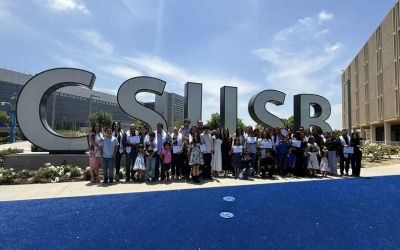
Moving through those hurdles mark another milestone for the Office of Pre-College Programs, which offers nine different and dynamic programs. Its services reach more than 5,000 students from San Bernardino, Rialto, and Colton Joint Unified School districts as well as students in the Coachella Valley.
These programs are designed to assists participants and their families with educational and personal support services with a goal of increasing high school graduation, college enrollment, persistence, and college completion.
Combined, the services encompass everything from academic tutoring to personal and leadership development, and many things beyond and in between.
“The entire purpose of the pre-college programs is to help folks get connected to higher education,” Steele said. “And it doesn’t have to be Cal State San Bernardino. It could be a community college. It could be trade school. We just want to provide those resources.”
“We have 14 different projects that work throughout the Inland Empire,” she added. “Programs like The Federal TRIO Programs, which includes something like the Upward Bound Program. Other projects help us work through the California Student Aid Commission to make sure students are getting their financial aid applications and their Dream Act application submitted.”
Other programs work specifically in key areas such as foster youth, increasing enrollment, increasing math and English fluency, and the College Corps program, which centers around community service.
The latter finds students required to complete 450 hours of community service in exchange for up to $10,000 living allowance and educational benefit/reward at the end.
“We remain committed to providing equitable access to folks throughout the region,” Steele said “If someone wants to obtain a higher education, regardless of their status, regardless of age, regardless of ability, there’s no reason why they should not be able to reach those goals.
“We want to do whatever is in our power to help students,” she added.
This story originally appeared in the Press Enterprise, March, 2026.
Stay up to date on all the good work we’re doing through the power of philanthropy. Sign up for our eNewsletter, Philanthropy Matters, today.